Exness in India: Availability, Legal Risk and Alternatives
Is Exness Available in India?
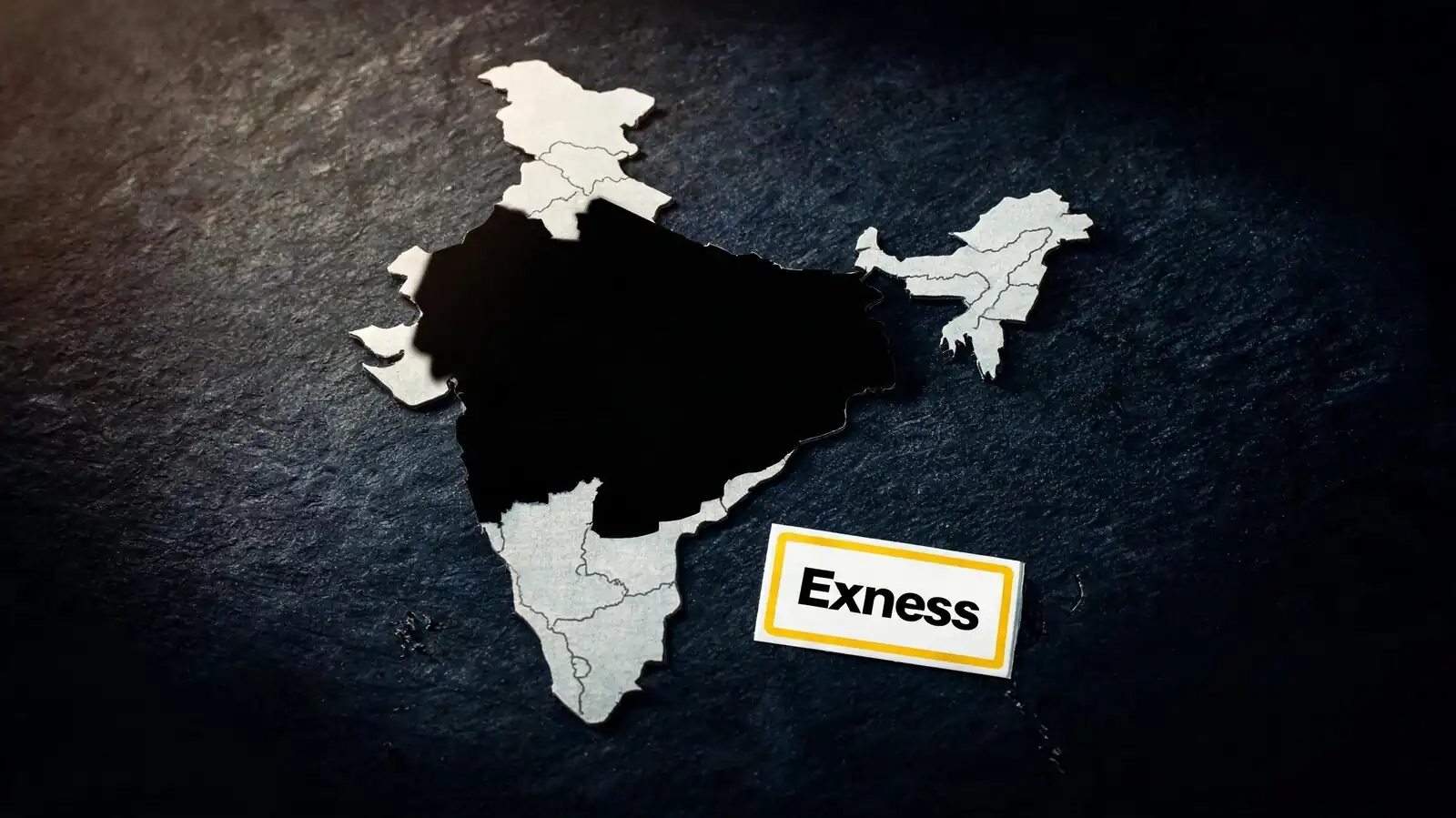
Exness does accept registrations from many Indian residents under its offshore entities, but India is treated as a higher-risk jurisdiction and the broker is not authorised by SEBI or listed by RBI as a permitted electronic trading platform.
Operational availability and legal eligibility are not the same question. The Exness signup form may complete for an Indian resident, but the regulatory recourse available to that resident is structured by India's own rules, not by the offshore entity's licence. Reading the country list literally is the first step; reading RBI guidance is the second.
Official country restriction checks
Exness publishes a country restriction list that excludes the US, Canada, Australia, most EU member states, the UK retail tier, Iran, North Korea, Syria, and several US territories. India is not on the broker's hard-restriction list as of the verification date, but absence from that list does not equal authorisation by Indian regulators. Verify the current list on the Exness help page before assuming eligibility.
Resident versus nationality wording
Country rules generally apply to residency, not nationality. An Indian passport holder living and tax-resident in a supported country is treated by their country of residence; an Indian resident is treated under Indian rules regardless of nationality. Document trails (utility bills, bank statements, KYC address) determine which framework applies.
Why availability can change
RBI has periodically updated its alert list of unauthorised electronic trading platforms. Brokers are sometimes added or removed; payment intermediaries occasionally block deposits or withdrawals to or from named entities. A method that worked last year may not work today, and the broker cannot override domestic banking rules.
- Check the Exness country restriction page on the day you intend to register
- Match your tax residency to the rule that will apply to you
- Treat any RBI alert list as binding even if Exness onboarding still completes
- Do not assume yesterday's payment method works today
The honest answer is "uncertain, and changing" — not "yes" or "no".
Exness onboarding may technically complete for Indian residents, but that is not the same as Indian regulatory authorisation — check both the broker list and the RBI alert list.
Exness and Indian Forex Rules
India restricts retail forex to INR-paired contracts on recognised exchanges (NSE, BSE) through SEBI-registered brokers. Trading non-INR pairs through offshore CFD brokers sits outside that framework and carries FEMA exposure that retail traders often underestimate.
The Indian retail forex regime is narrower than most offshore residents assume. The legal route for retail currency trading is exchange-traded currency derivatives on NSE or BSE, restricted to seven INR-paired contracts, accessed through SEBI-registered brokers. Anything outside that perimeter — non-INR pairs, CFDs on indices or metals, crypto CFDs — sits outside the recognised regime.
RBI and FEMA topics to verify
The Foreign Exchange Management Act (FEMA, 1999) governs cross-border currency movement for Indian residents. The Liberalised Remittance Scheme (LRS) allows up to USD 250,000 per individual per financial year for permitted purposes, and "margin trading or trading in foreign currency abroad" has historically been flagged as a non-permitted purpose. RBI issues alert lists naming unauthorised electronic trading platforms; brokers and payment providers operating outside the recognised regime may appear there.
INR pairs versus offshore CFDs
SEBI-regulated exchange-traded currency contracts (e.g., USDINR, EURINR) are the recognised retail product. Offshore CFD trading on majors like EURUSD or GBPUSD is a different product structure, traded outside SEBI's perimeter, and the legal risk falls on the resident, not the broker.
Why this is not legal advice
Indian retail forex regulation is interpreted differently by different practitioners, court rulings periodically shift the picture, and individual circumstances (NRO/NRE account status, tax residency, business income classification) change the answer. Consult a qualified Indian-law professional before assuming any specific outcome.
- Recognised retail product: INR-paired exchange contracts via SEBI-registered brokers
- Outside the perimeter: offshore CFDs on non-INR pairs, indices, metals, crypto CFDs
- LRS limit applies but the purpose code matters more than the figure
- RBI alert lists name unauthorised electronic trading platforms; check before assuming
The published policy is clear at the edges and ambiguous in the middle; the middle is where most retail traders sit.
Indian retail forex is recognised only inside the SEBI/exchange perimeter — offshore CFDs sit outside it, and the legal exposure rests with the resident.
Deposits and Withdrawals in India
Indian payment availability on Exness changes month to month. UPI, IMPS, and card payments to offshore CFD brokers are sometimes blocked by acquiring banks or NPCI participants, and crypto routing carries its own VDA tax and reporting issues.
Payment uncertainty is the single most important practical issue for Indian users. The broker may accept a payment method in principle, while the user's bank or card issuer declines the transaction in practice because the merchant category code is associated with non-permitted forex trading. The friction shows up at withdrawal more than at deposit.
Payment methods may be restricted
Exness lists bank cards, bank wire, Skrill, Neteller, Bitcoin, and Tether (ERC20 and TRC20) in its global payment list, plus local payment methods where available by region. Local Indian options such as UPI or IMPS appear and disappear from the Personal Area depending on the broker's current payment-aggregator agreements. Verify the methods shown inside your own Personal Area; the global list is the ceiling, not the floor.
UPI and local banking risk checks
UPI rails are governed by NPCI rules. Transactions to merchants flagged as unauthorised electronic trading platforms can be reversed, blocked, or referred for review. The user-side consequences include frozen deposits awaiting reconciliation and, in some reported cases, the user's UPI handle being temporarily restricted by the receiving bank.
Crypto funding warnings
Funding via Bitcoin or USDT routes around the rupee banking rails but creates its own tax and reporting issues under India's Virtual Digital Asset (VDA) regime. Transfers to and from exchanges are taxable events, VDA gains carry a 30% rate plus 1% TDS at source, and the record-keeping burden falls on the trader.
- UPI/IMPS to offshore brokers: unreliable; transactions may reverse
- Card deposits: declines depend on issuer and MCC matching
- Crypto routing: legal but creates 30% VDA tax, 1% TDS, and record-keeping load
- Same-method withdrawal rule applies; profits route to a designated method
The payment side is where most Indian-resident complaints originate, not the platform itself.
Whatever method shows in the Personal Area can be blocked at the bank or NPCI layer; assume payment friction and verify withdrawal before depositing meaningfully.
Tax Considerations for Indian Traders
Tax treatment of offshore CFD income for Indian residents depends on classification — speculative income, business income, or capital gains — and on whether the underlying activity itself is treated as permitted. Legality and tax are separate questions; both need a qualified professional.
Tax reporting does not legitimise the underlying activity. An Indian resident can be tax-liable on offshore trading income while the activity itself sits outside FEMA-permitted purposes. The Indian Income Tax Act treats trading profits under one of several heads depending on facts; the classification matters because rates and set-off rules differ.
Income classification to verify
Frequent intraday-style trading is often treated as speculative business income, taxed at slab rates, with losses set off only against speculative profits. Long-only currency positions can be treated differently. Derivative trading via recognised exchanges has a specific non-speculative treatment under section 43(5). Offshore CFD trading lacks an explicit exchange-derivative status, which complicates the position. The 30% VDA rate applies if crypto routing is used, on top of any trading-profit treatment.
Records needed for a tax professional
A tax adviser needs the full account statement (deposits, withdrawals, trades, swaps, commissions) exportable from the Exness Personal Area, plus bank statements showing the rupee leg of each transaction, FX conversion records, and any crypto-bridge records (exchange statements, wallet histories). Without that paper trail, no professional can construct a defensible filing.
Why legality and tax are separate issues
Filing and paying tax on offshore income does not retroactively authorise a non-permitted purpose under FEMA. Conversely, ignoring tax obligations does not make the activity less risky — it adds enforcement exposure on top of the underlying regulatory question. Treat them as two separate compliance tracks.
- Export Exness account history before any tax conversation
- Keep bank statements showing the rupee leg of each deposit/withdrawal
- Note that VDA tax applies to crypto routing on top of trading-income classification
- Engage an Indian chartered accountant familiar with cross-border trading
Filing carefully does not change the FEMA question, and the FEMA question does not excuse filing.
Indian tax and Indian forex permission are separate compliance tracks — a qualified CA can advise on tax classification, but cannot fix the FEMA question.
User Complaints and Forum Themes
Indian-user complaint clusters on Reddit and forex forums focus on three recurring themes: blocked deposits or reversed UPI, withdrawal routing changes mid-process, and the inability to escalate to an Indian regulator when something goes wrong.
The forum trail tells a consistent story. Indian-resident users praise the platform stack and spreads when they work, and describe a thin recourse pathway when they do not. The structural cause is straightforward: SEBI does not have jurisdiction over an offshore CFD broker, and the broker's primary regulator (e.g., FSA Seychelles) cannot resolve a domestic Indian payment dispute.
RBI alert-list discussions
Threads regularly surface the RBI alert list as a reference point. Posters disagree about whether an alert listing equals illegality of trading by residents, but the practical effect is the same — bank reluctance to process transactions and a heightened risk of UPI reversal. Use the alert list as a current-state signal, not a static rule.
Withdrawal and payment uncertainty
The most common operational complaint is a withdrawal that pends because the original deposit method is no longer available on the platform when the user goes to withdraw. The same-method rule forces routing through a substitute, and the substitute often has different processing windows or limits. Document everything from the start of the relationship to avoid that bind.
When to avoid offshore brokers
The forum advice converges on one point: traders who need a clear regulator-to-regulator complaint pathway should not use offshore brokers from India. Traders who can absorb the regulatory uncertainty and the payment friction sometimes proceed; that decision is theirs, and the consequences are theirs.
- Read forum threads from the last 12 months, not older posts
- Note which payment method the complaint used; that drives the rest
- Save the broker's published policy text in case it changes
- Treat single anecdotes as starting points, not verdicts
The themes are not Exness-specific — they apply to most offshore CFD brokers handling Indian residents.
Indian-user complaint patterns trace to the structural mismatch between offshore CFD brokers and the domestic regulator perimeter, not to a single broker failure.
Safer Alternatives for Indian Traders
The defensible retail forex route in India runs through SEBI-registered brokers offering exchange-traded INR currency derivatives on NSE or BSE. Domestic equity, ETF, and commodity exchanges cover most of the cases that draw Indian users to offshore CFDs.
For most Indian retail traders, the sensible decision is to stay inside the recognised regime rather than to optimise broker selection outside it. The domestic options are narrower in product scope but unambiguous in regulator status, which matters when something goes wrong.
SEBI-regulated exchange routes
NSE and BSE list a limited set of INR-paired currency futures and options (USDINR, EURINR, GBPINR, JPYINR, plus cross-INR variants) accessible through SEBI-registered brokers. Equity-derivative and index-derivative segments cover hedging and directional strategies on Indian markets. Commodity exchanges (MCX) cover metals and energy. None of these match the symbol range of an offshore CFD account, but they sit inside Indian regulatory protection.
Domestic broker comparison angle
SEBI-registered discount brokers (Zerodha, Upstox, Groww, ICICI Direct, and others) offer the currency-derivative segment at low transaction costs. Compare brokerage, exchange transaction charges, STT/CTT where applicable, GST, and SEBI turnover fees rather than just headline brokerage. The trust trade-off is in your favour by definition — the recourse is to SEBI, not to a foreign regulator.
Questions to ask a qualified adviser
Before deciding, ask a SEBI-registered investment adviser or chartered accountant: which segments fit your goal, how is the income classified for your situation, what records do you need to keep, and what is the realistic edge over a recognised passive strategy. The questions matter more than the broker brand.
- NSE/BSE currency derivatives via SEBI-registered brokers (recognised perimeter)
- MCX commodity derivatives for metals/energy exposure
- Indian equity, ETF, and equity-derivative segments for directional positions
- Adviser consult on classification before scaling activity
The safest route is the recognised one; everything else is a tradeoff the trader owns personally.
For most Indian residents, SEBI-registered exchange-traded products are the defensible alternative — narrower scope, unambiguous regulator, and a complaint pathway that actually exists.
Frequently asked questions
Is Exness illegal in India?
Indian regulators (RBI, SEBI) do not authorise offshore CFD brokers for retail forex. Whether residents who trade with Exness are technically breaking the law depends on FEMA interpretation and personal facts, and qualified legal opinion is required. This page does not provide legal advice; consult an Indian-law professional before deciding.
Can Indian residents deposit on Exness using UPI?
UPI availability changes month to month and is governed by NPCI rules. Transactions to merchants associated with unauthorised electronic trading platforms may be blocked or reversed. Verify in the Personal Area before depositing; do not assume yesterday method works today.
Will Indian banks block Exness card payments?
Some Indian banks decline card payments to offshore CFD brokers based on merchant category codes and internal risk policy. There is no single answer across all banks. The decline can happen at deposit, at withdrawal, or in a later chargeback review.
Is crypto a safer way for Indian traders to fund Exness?
Crypto routing avoids rupee-rails declines but triggers the Virtual Digital Asset tax regime (30% rate plus 1% TDS at source) and a meaningful record-keeping load. It removes one risk and adds another — not a clean improvement.
What is the safer alternative to Exness for Indian residents?
SEBI-registered brokers offering exchange-traded currency, equity, and commodity derivatives on NSE, BSE, and MCX. The product scope is narrower than offshore CFDs, but the regulatory protection is real and the complaint pathway is domestic.